OBITUARIES | DAVE KINSELLA and BOB BLAIR
The passing of two distinguished former Central Stags pacemen this month recalls the early years of Central Districts as players of the 1950 and 1960s built a solid legacy to hand over to subsequent representatives.
DAVE KINSELLA
Central Stags cap number 65
Dave Kinsella distinguished himself not only as a Taranaki record-breaker and quality opening bowler for CD in the Plunket Shield, but later as a Test and One-Day International umpire for New Zealand.
Generating lively pace off a relatively short run-up, Dave enjoyed a lengthy Districts cricket career that, aligned with his teaching career, saw him represent Taranaki, Manawatū and Nelson. He played in five Hawke Cup Challenge Matches.
Dave was born in Taranaki and schooled at New Plymouth Boys’ High, growing up to become the first player to reach 100 wickets for Taranaki’s senior rep side, a match-winning bowler and a hugely influential club man at New Plymouth Old Boys’ Cricket Club.
His 73 wickets in 1958/59 for NPOBCC’s Senior A team stands as the club’s record to this day and, in the late ’50s and early ’60s, the club made four successive Taranaki finals — winning three, which was an incredible achievement at that time. Dave was named in the NPOBCC team of the century at the club’s centennial dinner in 2020.
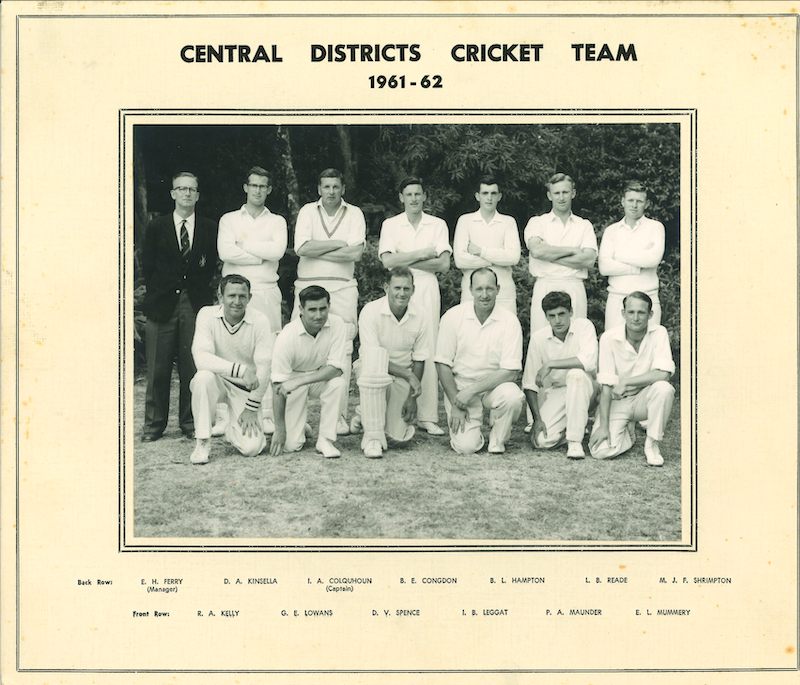
For Taranaki, his most impressive performance was 14 wickets in a match against a powerful Hutt Valley side at Pukekura Park in 1966. He took 8/25 in the second innings to see the visitors dismissed for just 68. After 24 Taranaki rep matches between 1958 and 1969, Dave finished with 106 wickets at an average of just 11.57!
For CD, Dave played 28 first-class matches, having debuted at his beloved Pukekura Park in late 1961 and playing in the Plunket Shield until the end of the 1965/66 season.
He could hit the bat hard, and finished with 72 wickets at a respectable 23.72 — including three bags and a first-class best of 6/25 against Northern Districts.
Dave also got to play for CD in a rain-affected 1964 tour match against South Africa in Palmerston North, and in a first-class fixture for CD against Pakistan the following year at Pukekura Park where he took three wickets in each innings, including that of the great captain Hanif Mohammad.
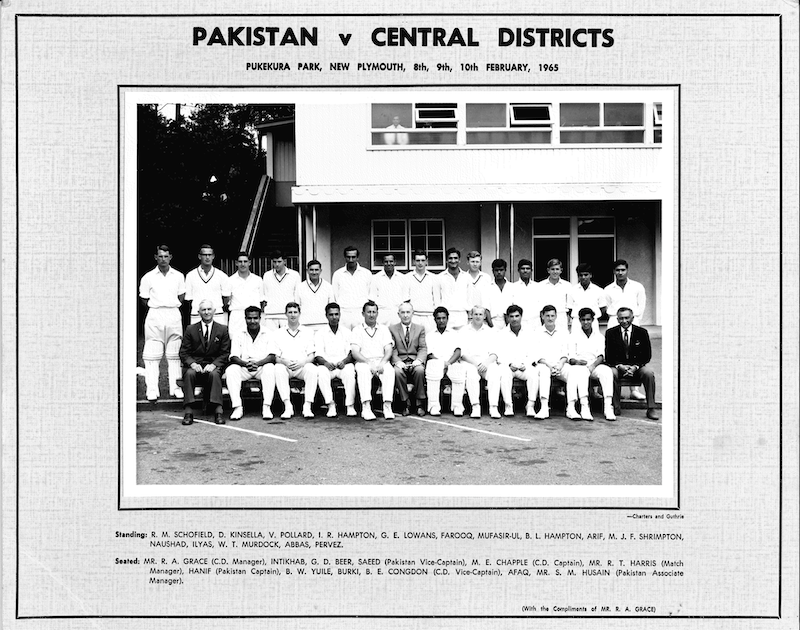
There was also a terrific performance against Otago at Whanganui’s Cooks Gardens in 1965 when Dave bowled 27.4 overs for 17 maidens and 2/25. He had a young Glenn Turner dropped three times!
Although he batted in the tail, generally at number 11; spectators also enjoyed his free-spirited approach to batting, although he showed he could also knuckle down if required, notably helping to deny Canterbury a Plunket Shield win at Pukekura Park.
Dave flourished in a strong CD era that included some of the greats - the ilk of Vic Pollard and Bryan Yuile, Bevan Congdon, Murray Chapple, Richard Collinge, Gary Bartlett and Mike Shrimpton, all of whom had or would go on to represent New Zealand in Test cricket.
He was also a popular and terrific mentor at both the Community and representative levels of the game. NPOBCC notes that Dave was an important infuence on an up-and-coming paceman name Ali Jordan, a future Taranaki and Stags pace legend.
Dave and wife Shirley (who played cricket for Whanganui, was president of the Manawatū Women’s Cricket Association and managed the Manawatū women’s team) also passed on their family passion for cricket to their children. Daughter Penny grew up to represent CD and Wellington and played Test and ODI cricket for the WHITE FERNS, while son Roger represented New Zealand at indoor cricket.
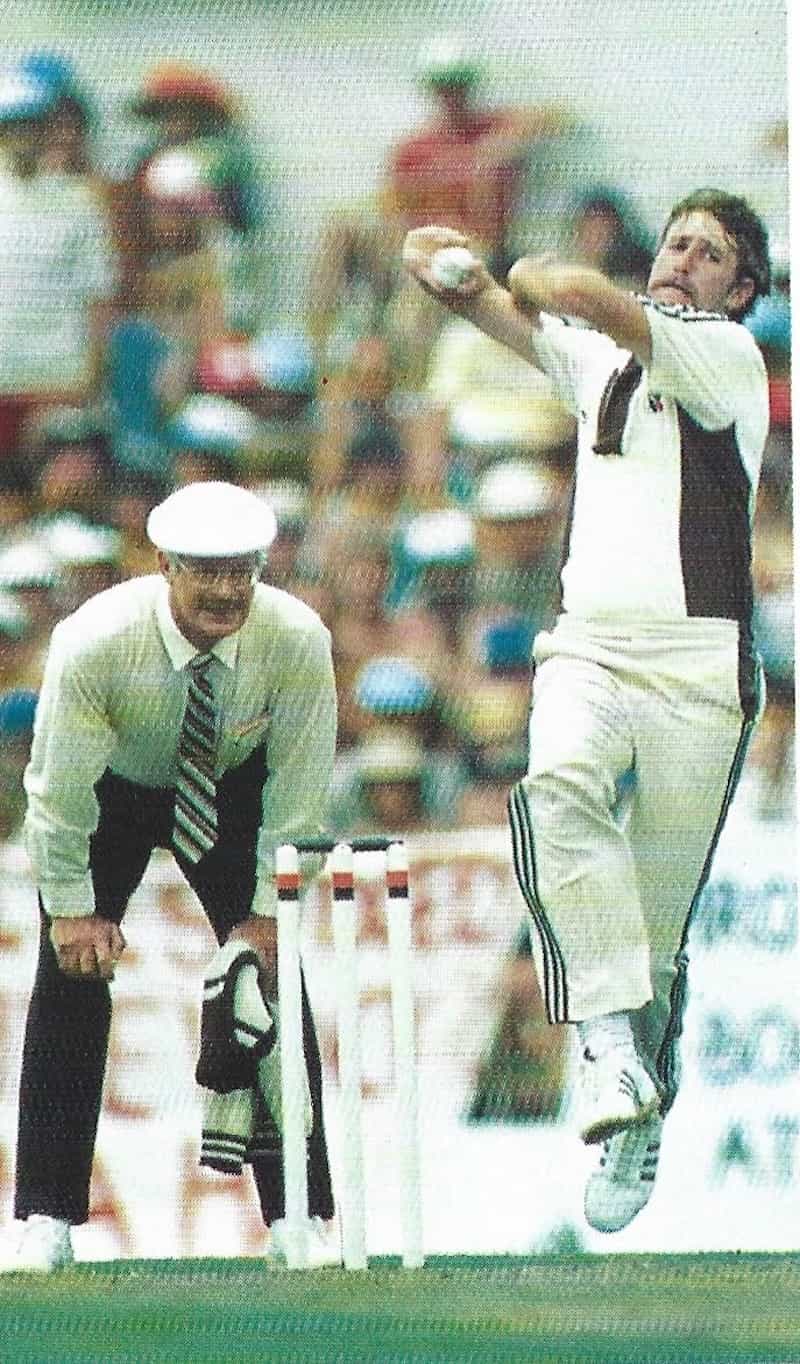
It was his umpiring career that earned Dave his own Test debut. He was one of the last to exhibit the ‘crouching’ style of umpiring at the bowlers’ end at international level, standing in three Test matches between 1981 and 1983 (all at Lancaster Park), and six men’s ODIs between 1982 and 1985: heady, enjoyable days when the national team was flying high.
He also umpired a New Zealand Women’s 60-over ODI at Palmerston North in 1982, and stood in 33 men’s first-class matches, 17 men’s List A matches, and eight Hawke Cup fixtures.
Dave was always giving back to the game, one way or another. He had served on the NPOBCC committee as club captain and chairman, and gave encouragement to countless young cricketers across the CD swathe, through his roles as a popular teacher and school leader. Once he became an umpire, David put considerable effort into developing and mentoring new umpires in the Manawatū and wider Central Districts regions.
Dave was Central Stags first-class cap number 65, and passed away in Wellington on 16 June 2026, at 89 years. CDCA extends our deepest condolences to Penny, Roger and family, and everyone who knew Dave, who gave so much to cricket and his community.
BOB BLAIR
Central Stags cap number 36
New Zealand Test representative BOB BLAIR is more readily identified with his native Wellington, and particularly Petone, but a brief move to Hawke’s Bay, where he had initially planned to settle, led to him representing CD for the summer of 1955/56.
Bob’s name will be forever associated with the 1953 Christmas Eve Tangiwai rail disaster in which his fiancée, Nerissa Love, lost her life alongside scores of other victims.
Just 21 at the time, Bob was in South Africa representing New Zealand in a Test match, becoming famous for the courage he showed alongside Bert Sutcliffe as he went out to bat to try to save the match, despite Bob’s swirling grief and Sutcliffe’s bandaged head from a vicious bouncer in the days before helmets.
The deeply moving episode in the BLACKCAPS’ Test history stands alongside a Plunket Shield record that marks Bob as one of the greats of the competition.
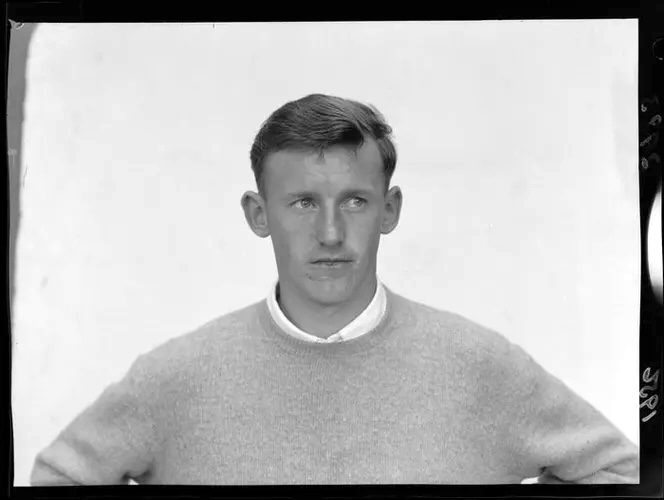
When he arrived in Hawke’s Bay, 23 years old, he had already been ajudged as a New Zealand Cricket Almanack Player of the Year. It was more than a bonus for CD to have his services, and he took 42 first-cass wickets that summer from just five matches at an average of 17.28, including 7/100 against Auckland at Eden Park.
In that match alone he took 11 wickets, then backed up with 6/95 in his next outing against Wellington at the Basin. He returned to Wellington the following season to have an even more outstanding Plunket Shield season.
Bob tallied 43 wickets at 35.33 in 19 Tests and a head-turning 537 first-class wickets at 12.29, including a best innings haul of 9/72 for Wellington against Auckland. 41 five-wicket bags, a dozen match hauls of 10 wickets of more.
In 2013 he told journalist and fellow BLACKCAPS pace bowler Jonathan Millmow that the tragedy influenced his bowling.
"It made me," Bob said. "When I got the ball in my hand, I wanted to hurt people. I had been hurt. I wanted to deck people, that is why I bowled so short. It gave me fire."
Bob had a sharp mind and lean frame that age couldn’t soften, nor did the accumulating years stop him from enjoying his golf and cricket.
After his Domestic career finished in 1965, he was an influential professional coach in Queensland, Zimbabwe, South Africa, Northern Ireland and England. He also continued playing and performing himself, at a lower level, until he was 67.
Hear Bob share some recollections and philosophies here.
Bob Blair was Central Stags cap number 36, and passed away in England on his 94th birthday - 23 June 2026.
He had lived in Chesire for many years with his second wife Barbara, and Central Districts Cricket extends our condolences to Bob’s family, friends, and Cricket Wellington.
Article added: Sunday 28 June 2026